
Introduction
The Instrumentation, Modeling, Simulation, and Experimentation (IMSE) laboratory is part of the Components and Systems (COSYS) department at Gustave Eiffel University (UGE). It is located in the Bienvenüe building at UGE, on the Marne-la-Vallée campus.
Research at IMSE covers various aspects of modeling physical and chemical phenomena at both macroscopic and microscopic scales, as well as the design and development of experimental and digital tools dedicated to civil engineering and the digital and smart city.
Strengths
Two main themes are developed and highlighted by the laboratory: (i) the study of sensors and objects at small scales (down to the molecular level) interacting with their environment, and (ii) large-scale urban computation.
The IMSE laboratory demonstrates a broad openness to French and international institutions, as evidenced by the numerous national and international collaborations in which its members are involved. IMSE’s strong interaction with other research units at Gustave Eiffel University enables it to contribute to a unifying spirit within the institution. The laboratory is also deeply involved in generating innovations and scientific advances, resulting in the creation of or collaboration with several SMEs (such as Itech) and start-ups (notably Ecotropy and Altaroad).
Furthermore, IMSE actively contributes to UGE’s educational offerings, with strong involvement of its teacher-researchers and researchers in several undergraduate, master’s, and doctoral programs. In particular, it hosts the UGE Master’s in Chemistry, co-accredited with Université Paris-Est Créteil, as well as the Master 2 program in Molecular Physico-Chemistry and Applications (PCMA) and the research training project “SimSenseEnergy” in collaboration with ESIEE-Paris.
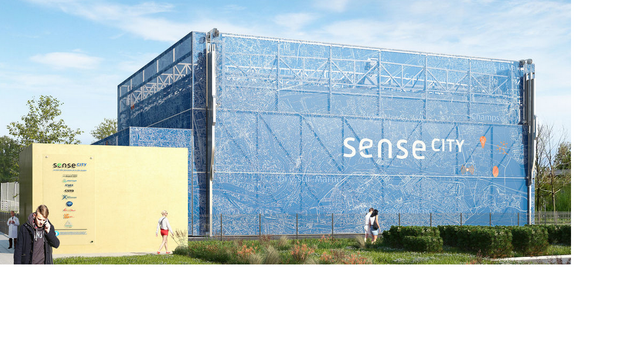
The management of Sense-City, a remarkable facility of UGE, is fully supported by IMSE.
Regarding innovation and relations with the socio-economic world, the IMSE laboratory promotes an approach aimed at making some of its research results available to society, through patents, software, etc. For example, the CESAR-LCPC software serves as a vehicle for transferring results to engineering, and also as a platform for developing projects with industrial partners. This transfer of results to industry is carried out in particular within the Institutes for Energy Transition Efficacity, Vedecom, and SuperGrid, through secondments, Cifre theses, and joint publications and patents.
Available resources
- 17 (teacher-)researchers/research managers, including 5 Senior Researchers (DR), 1 Full Professor (PR), 1 Emeritus Professor, 1 Associate Professor (MCF), 2 Research Scientists (CR), 3 Senior Civil Engineering Officers (IGPEF), 2 Civil Engineering Engineers (ICPEF), 2 Public Works Engineers (IDTPE), and 14 with habilitation to supervise research (HDR).
- 1 Director of a Major Facility at UGE
- 1 Research Engineer
- 1 Senior Technician
- 1 Administrative Assistant
The laboratory hosts on average about ten PhD students and postdoctoral researchers, as well as apprentices, interns, and visiting researchers, both national and international.
The laboratory operates significant scientific equipment in the fields of numerical computation, measurement, and instrumentation.
Sense-City
Gustave Eiffel University hosts the major facility Sense-City, which was funded by the Investments for the Future Program managed by the ANR. This facility is dedicated to prototyping solutions for the sustainable city, such as air pollutant nanosensors, depolluting nanomaterials, devices for optimal thermal management of buildings, energy smart grids, geothermal installations, cooling islands, and more.
Now established, this platform must continue to grow and better serve the scientific and professional communities related to urban development. The operational implementation of the project is carried out by a team integrated within IMSE.
Scientific project
Ambitions
Capitalizing on Everyone’s Expertise
Research activities at IMSE were initially centered on the development of the CESAR finite element calculation software, dedicated to civil engineering, and later on structural health monitoring (SHM), where IMSE gained recognized expertise in the analysis and monitoring of civil engineering structures through the study of electromagnetic wave propagation and the design and development of fiber optic sensors for this purpose. Over time, IMSE has addressed other emerging topics such as nanotechnologies applied to urban engineering, active photonics for visibility in scattering media, urban modeling, inverse models, and more recently, quantum modeling applied to the physico-chemistry of isolated or embedded molecular systems. Two joint research teams, CARMIN with SII and NACRE with LPICM, were created to strengthen and support LISIS’s commitment to these new topics.
The quality of the laboratory’s scientific output in the aforementioned fields is recognized by the significant number of national and international scientific collaborations, and is based on the scale and ambition of the projects led by its members.
One of the future priorities for LISIS management will be to capitalize on and consolidate this expertise, through which the laboratory has built its national and international visibility, by identifying and promoting the actions of each researcher, and by pursuing an even more ambitious international outreach than today. This last point represents a potential that has not yet been fully exploited.
This laboratory project aims first to consolidate and promote LISIS’s scientific activity in its own areas of excellence, which can be identified in the following directions:
- Soil and structural mechanics applied to civil engineering. Intelligent systems for better management of urban energy and resources and for monitoring the integrity of structures and works.
- Multiphysics modeling and analysis of urban phenomena: sensors and advanced numerical simulations for air and water quality, building thermal performance, climate, and environment.
- Modeling of isolated and embedded molecular systems and their applications to quantum technology, materials science, catalysis, and the study of spectra across all frequency ranges.
Knowing Each Other Better to Work Better Together
IMSE has recognized expertise in very diverse research fields. Nevertheless, the actions currently carried out by its members in their own areas of expertise are mostly developed independently, resulting in few cross-disciplinary interactions. This characteristic is only partially justified by thematic differentiation, as the most recent scientific advances, for example in multi-scale modeling, show that transdisciplinary permeability at LISIS is both possible and achievable.
To foster the development of such synergies, it is essential that laboratory members have a more precise understanding of each other’s research activities and actions. To achieve this, it is crucial to strengthen communication and the transfer of scientific skills within the laboratory. Guided by the principle of “knowing each other better to work better together,” this project commits to a series of specific initiatives, detailed later in this document, to multiply exchanges and promote collaborative research.
The ambition for the future is to pool and share our skills in order to develop a systemic scientific approach that can combine the different themes through observation, experimentation, and theoretical modeling. Establishing permanent interconnections between the recognized areas at IMSE will not only promote collaborative and cross-disciplinary research, but also help address a number of UGE’s strategic scientific challenges.
Scope of Action
The project is based on three fundamental pillars:
- Infrastructures
- Energy
- Environment
These pillars define the scope of action for the laboratory’s research divisions, whose specialties are reflected in the following UGE research and expertise areas:
- Civil engineering, infrastructures
- Urban resilience, environmental impacts
- Digital urban systems, sensors (for health, energy, environment)
- Urban engineering (urban energy and climate)
- Physics, chemistry
- Materials mechanics
- Automation: control, observers, networked systems
The project is also aligned with the three strategic themes of I-SITE FUTURE, led by Gustave Eiffel University:
- The resource-efficient city
- The safe and resilient city
- The smart and connected city
and with the three new directions of the future I-SITE project:
- Towards just and equitable cities
- Towards resource-efficient cities
- Towards resilient cities
Research divisions and fields
The following three research divisions, each working on different research fields, will be created within IMSE:
- Modeling and Monitoring of Soils and Structures, Intelligent Systems (MS3I)
- Simulation, Measurement, and Analysis of Urban Phenomena and Environment (SIMAPE)
- Physical Chemistry, Nanoscience, and Quantum Technologies (CONPAQT)
International relations
IMSE’s international relations are diverse and well-established. Among others, we can mention the International Associated Laboratory SEnSIN-CT between UGE and Politecnico di Milano, and the SINERGIE Network with Singapore. In addition, LISIS supervises joint PhD theses with the University of São Paulo in Brazil and is in the process of establishing another with the Federal University of Bahia. There are also strong collaborations, with regular publications, with the University of Rome Tor Vergata in Italy, the University of Seville and the Polytechnic University of Madrid in Spain, and Concordia University in Canada. Finally, projects are being submitted with Laval University in Canada and the Karlsruhe Technical Institute in Germany.
RobertoLINGUERRI
PR, HDR
roberto.linguerri@univ-eiffel.fr
Marne-la-Vallée

EmmanuelBourgeois
Chercheur
Marne-la-ValléeFrédéricBourquin
Marne-la-Vallée
RachidaChakir
Chercheur en Mathématiques Appliquées
+33 (0)1 81 66 84 36Marne-la-Vallée
PatriceChatellier
Chercheur
patrice.chatellier@univ-eiffel.fr
Marne-la-Vallée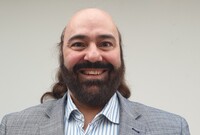
GilneyDAMM
Directeur de Recherche - Senior Research Scientist
Marne-la-ValléeMonssefDrissi-Habti
BouguenaisMajdiHOCHLAF
Marne-la-ValléeStéphaneLAPORTE
Directeur Sense-City
stephane.laporte@univ-eiffel.fr
Marne-la-Vallée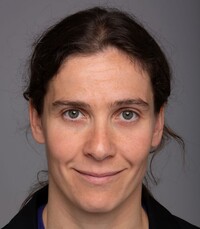
BérengèreLebental
MSc, PhD, ICPEF, HDR
Direction de recherches
Conseillère scientifique d'Altaroad
Conseillère scientifique d'Hydroscope
ORCID : 0000-0001-8985-8203berengere.lebental@univ-eiffel.fr
Marne-la-ValléePhilippeLeveque
Marne-la-Vallée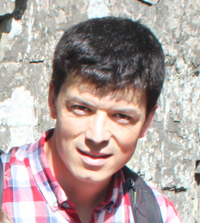
GuillaumePERRIN
Chercheur en apprentissage statistique et quantification des incertitudes
guillaume.perrin@univ-eiffel.fr
+33 (0)1 81 66 81 83Marne-la-Vallée
AnneRuas
Chercheur en Géographie (smart cities, climat urbain, gestion des dechets, artificialisation ) & Géomatique (modélisation, simulation, représentation)
+33 (0)1 81 66 80 99Marne-la-Vallée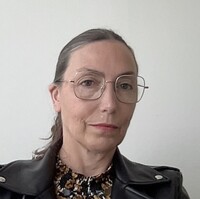
ClaudeRospars
Marne-la-ValléeDominiqueSiegert
Marne-la-ValléeYanULANOWSKI
Ingénieur d'études & Responsable technique
+33 (0)1 81 66 80 83
Sense-CityMarne-la-Vallée
JulienWaeytens
Directeur de Recherche
julien.waeytens@univ-eiffel.fr
+33 (0)1 81 66 84 53Marne-la-Vallée