
Immanent
Project funded by MEDE (DRI)
Partners: ESIEE, IGN, LNE, CSTB, ENPC, IFSTTAR.
Serving sustainable development, the IMMANENT project aimed to develop the methods and tools necessary for a detailed, real-time understanding of the physical quantities that govern, at the city level, environmental quality and the energy performance of buildings.
The environmental challenges linked to the urbanization of our modern societies require control over environmental parameters that determine quality of life in urban areas, as well as those affecting the energy balance of buildings. Sustainable development involves better preservation of built heritage and networks, including protection against the consequences of anticipated climate change.
Contributing to these objectives were sensors and information processing widely distributed throughout urban space, thus enabling control over the physics of the City.
Driven and funded by the Paris-Est Scientific and Technical Cluster, the IMMANENT project aimed to bring together all PST Paris-Est partners around a transversal theme likely to unite them. Specialists in measurement, metrology, data assimilation, estimation, wave propagation, signal processing, and electronics were brought together. The entire chain of expertise, including practical skills, enabled the production of knowledge and tools that can, in principle, be demonstrated as relevant in the field.
The IMMANENT project was divided into two topics: air quality in the city (AIR topic) and the evaluation of building energy performance (BAT topic). It resulted in two emblematic demonstrators of what the city of tomorrow could benefit from: first, a wireless sensor network and a dedicated data assimilation code based on numerical models were combined to quickly detect and locate pollution sources in the city. Second, the CSTB's experimental MARIA building demonstrated the relevance of combining sensors and inverse modeling to quantitatively and rapidly assess energy transfers within a building, in order to better understand how to renovate and better manage future smart buildings.
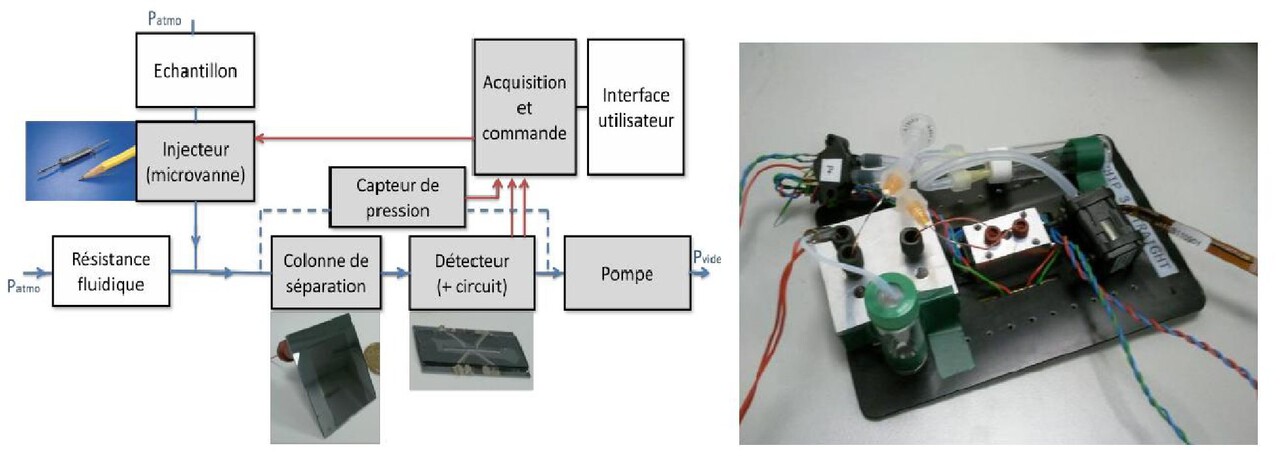
To this end, the project teams sought to address scientific and technical questions related to the adaptation of inverse modeling techniques and their representation (ENPC, IFSTTAR), particularly to separate heat losses related to building use from those related to the envelope, the design of a micro-sensor for air quality (ESIEE, IFSTTAR) and its metrological qualification (LNE), and the design and implementation of an autonomous and connected network of measurement boxes housing the new micro-sensors (IGN, ESIEE, IFSTTAR).
Contacts
FrédéricBourquin
Marne-la-Vallée